People ask us a version of the same question a lot: what is it actually like to spend your day working in behavioral health? Not the brochure version. The real one, with the hard parts included.
We think that question deserves an honest answer, so here it is, based on what our teams in Salem and Woodburn actually experience day to day at Marion County Health and Human Services (MCHHS).
What does a behavioral health worker actually do?
Day to day, working in behavioral health depends on the role, but most positions involve some mix of direct client contact, documentation, and team coordination. A Mental Health Associate might support clients through daily activities and check-ins. A Mental Health Specialist often carries more clinical responsibility, working through assessments and treatment planning with individuals and families. A Peer Support Specialist draws on their own lived recovery experience to connect with clients in a way that clinical training alone can’t replicate.
Every one of these roles is in-person, in Salem or Woodburn. There’s a rhythm to it: morning check-ins, scheduled client time, documentation, and team huddles where you talk through cases with people who know the same clients you do. It’s not a job you do alone in a cubicle. You’re working alongside a team every day, which matters more than it might sound on paper.
What are the most rewarding parts of the job?
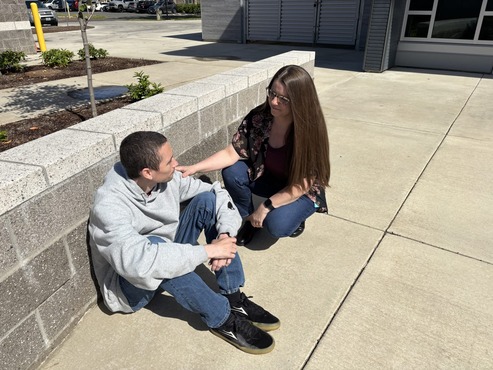
The honest answer is the same one most people in this field give: you see the effect of your work directly. A client who’s stabilized after a crisis. A family that gets connected to the right resource before things get worse. Someone in recovery who tells you that having a Peer Support Specialist who’s been through it themselves made the difference in whether they kept showing up.
That last point matters more than people expect going in. If you’re someone like Luis, who’s built a career around his own recovery story, this is one of the few fields where that experience isn’t something to downplay. It’s the qualification itself.
There’s also the steadier kind of reward: knowing your caseload, your team, and your supervisor well enough that the work gets easier to carry over time, even when the cases themselves stay hard. It’s one of the clearer signs that working in behavioral health gets more sustainable with experience, not less.
What are the hardest parts, and how does MCHHS support its team?
We’re not going to pretend this work is easy, because it isn’t. Caseloads can be heavy. You’re dealing with people in crisis, sometimes daily, and that takes a toll even for people who are good at their jobs and care deeply about the people they serve. Burnout is a real risk in this field everywhere, not just here.
What we can tell you honestly is how MCHHS tries to support people through that. Every employee has access to an Employee Assistance Program with six counseling sessions plus legal, financial, and homeownership resources, all at no cost. Supervisors are expected to be actively involved, not distant managers who only show up for performance reviews. Union protections also play a role here, including safeguards around overtime, so the job doesn’t quietly expand to fill every hour you have.
None of that erases the difficulty of the work. It just means that working in behavioral health here doesn’t mean carrying it without backup.
What roles can you start in?
There are several entry points depending on your background:
- Peer Support Specialist, for people with lived recovery experience who want to use that directly to help others. No clinical degree required, just your own experience and the right training and certification.
- Mental Health Associate, a strong starting point for people early in a human services career who want direct client contact and a path to grow.
- Mental Health Specialist, for people with more clinical background who want to take on assessment and treatment planning work.
- Crisis Clinician, for licensed clinicians ready to work in crisis response. We’ve written about this role in detail, if you want the specifics.
If you’re bilingual and your role requires it, passing the bilingual skills test also adds 5% in bilingual pay, recognizing the real value that skill brings to serving Marion County’s community, including for community health workers like Sofia in Woodburn who connect with clients in their first language.
Do you need a license or degree to get started?
Not always, and this surprises people. Peer Support Specialist roles are built around lived experience rather than a degree. Mental Health Associate positions typically ask for relevant coursework or experience rather than a clinical license. Mental Health Specialist and Crisis Clinician roles do require more formal clinical qualifications, since they involve assessment and treatment work directly.
If you’re early in your career, like someone fresh out of an MSW program who’s worried that public hiring only wants seasoned veterans, that’s not the full picture. There are starting points here that don’t require years of experience, and the agency has structured ways to grow from one role into the next as you build your skills.
What it’s like to work in behavioral health at MCHHS, in plain terms
If we had to summarize what working in behavioral health at MCHHS is really like: the work is genuinely hard some days, genuinely meaningful most days, and you’re never doing it without a team around you. The schedule is in-person and predictable rather than flexible, and that predictability is part of what makes the harder days manageable. You’ll have a supervisor who’s expected to actually support you, an EAP if you need it, and union protections that keep the job from quietly taking over your life.
We take care of the people who take care of others, and that’s not a slogan we put on a poster. It shapes how teams are staffed, how supervisors are expected to show up, and how the benefits package is built. Whether you’re early in your career or bringing years of clinical experience, there’s a role here that can use what you already know.
If you want to see what’s open right now, you can browse current openings on GovernmentJobs, or read more about what a Crisis Clinician’s day actually looks like if that path interests you. You can also check the Benefits page for the full picture on pay and support, including PERS retirement coverage explained directly at oregon.gov/pers.
Frequently asked questions
Do you need a degree to start working in behavioral health at MCHHS?
Not for every role. Peer Support Specialist positions are built around lived recovery experience rather than a degree. Mental Health Specialist and Crisis Clinician roles do require clinical qualifications.
Is working in behavioral health at MCHHS remote or in-person?
All behavioral health roles are in-person, based in Salem or Woodburn. There’s no remote or hybrid option.
What support does MCHHS offer for burnout in behavioral health roles?
Every employee has access to an Employee Assistance Program with six free counseling sessions plus legal and financial resources, active supervisor support, and union protections around overtime.
What’s the difference between a Peer Support Specialist and a Mental Health Specialist?
A Peer Support Specialist uses their own lived recovery experience to support clients and doesn’t require a clinical degree. A Mental Health Specialist carries more clinical responsibility, including assessments and treatment planning, and requires more formal qualifications.
